




Telehealth equipment, integrated with software

Telehealth Equipment, Devices, and Solutions

Telemedicine carts, portable telehealth kits, remote patient monitoring kits, and the exam devices inside them, pre-configured to work with one HIPAA-compliant software platform. Designed, integrated, and tested in Austin, Texas since 2015 for rural and community hospitals, clinics, skilled nursing facilities, and schools.

Customers in 14+ US states and 12+ countries  ·  Hospital-grade components  ·  One vendor accountable for the whole system

Telemedicine Cart Telemedicine carts
Telemedicine Kit Telemedicine kits
RPM Kit Remote monitoring kits
Trusted by healthcare organizations across the US and overseas
The basics

What counts as telehealth equipment?

Telehealth equipment is everything a clinician needs to see, hear, and examine a patient who is somewhere else: a display and camera, room audio, a computer or tablet, the exam devices that capture what a webcam cannot, and the software that moves images, sounds, and vitals to the remote provider. A video call alone is telehealth. Equipment is what turns it into a medical exam.

01

Telehealth carts

Hospital-grade mobile workstations for exam rooms, emergency departments, and nursing units: display, PTZ camera, audio, battery backup, and the medical devices your program needs.

See our carts →
02

Telehealth kits

Portable cases with a touchscreen tablet, HD webcam, and the same device menu as a cart, for home visits, schools, mobile units, and clinics without a fixed exam room.

See our kits →
03

Telehealth devices

Digital stethoscopes, exam cameras, otoscopes, 12-lead ECG, and Bluetooth vitals devices that stream live in the visit or send readings straight into the patient record.

See the devices →
04

Software and integration

One platform that runs the video visit, drives the devices, records vitals without manual entry, and documents the encounter, with AI-generated notes available.

See the platform →
Equipment catalog

Our telehealth carts, kits, and remote monitoring equipment

Every configuration arrives pre-connected, configured, and tested, and runs on the same CureCompanion software. Choose the form factor; we configure the devices for your program.

Telemedicine Cart
Telemedicine cart

Telemedicine Cart

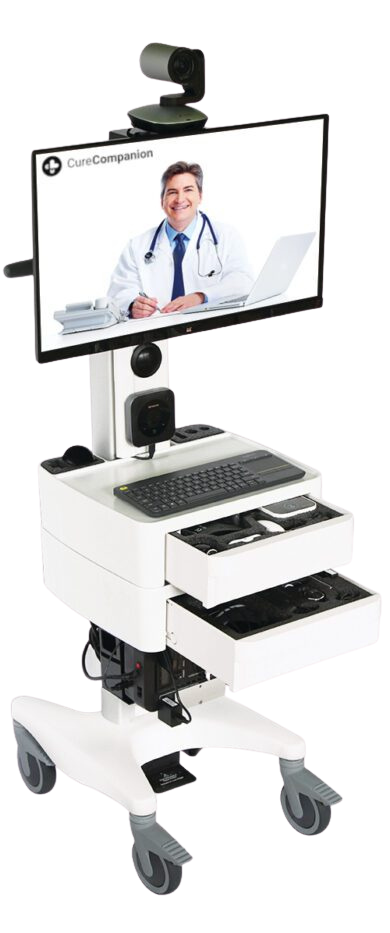
Hospital-grade telemedicine workstation for exam rooms, emergency departments, and nursing units.

  • PC with 27" 1080p display, wireless keyboard and touchpad
  • PTZ 1080p HD camera with far-end camera control
  • Conference-grade speaker and microphone with echo cancellation
  • Medical-grade battery backup (900VA/480W UPS) and pneumatic height adjustment
  • GCX hospital-grade cart with locking drawers
  • Medical devices configured per facility: handheld exam camera, stethoscope, otoscope, 12-lead ECG, vitals devices, and more
  • Also available without medical devices for video-only programs
Telemedicine cart details →
Telemedicine Kit
Telemedicine kit

Telemedicine Kit

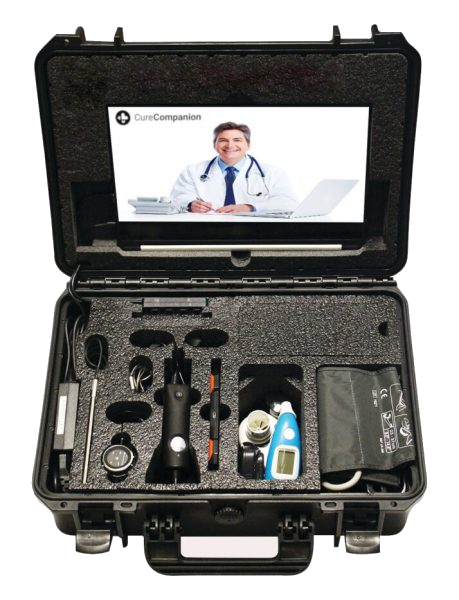
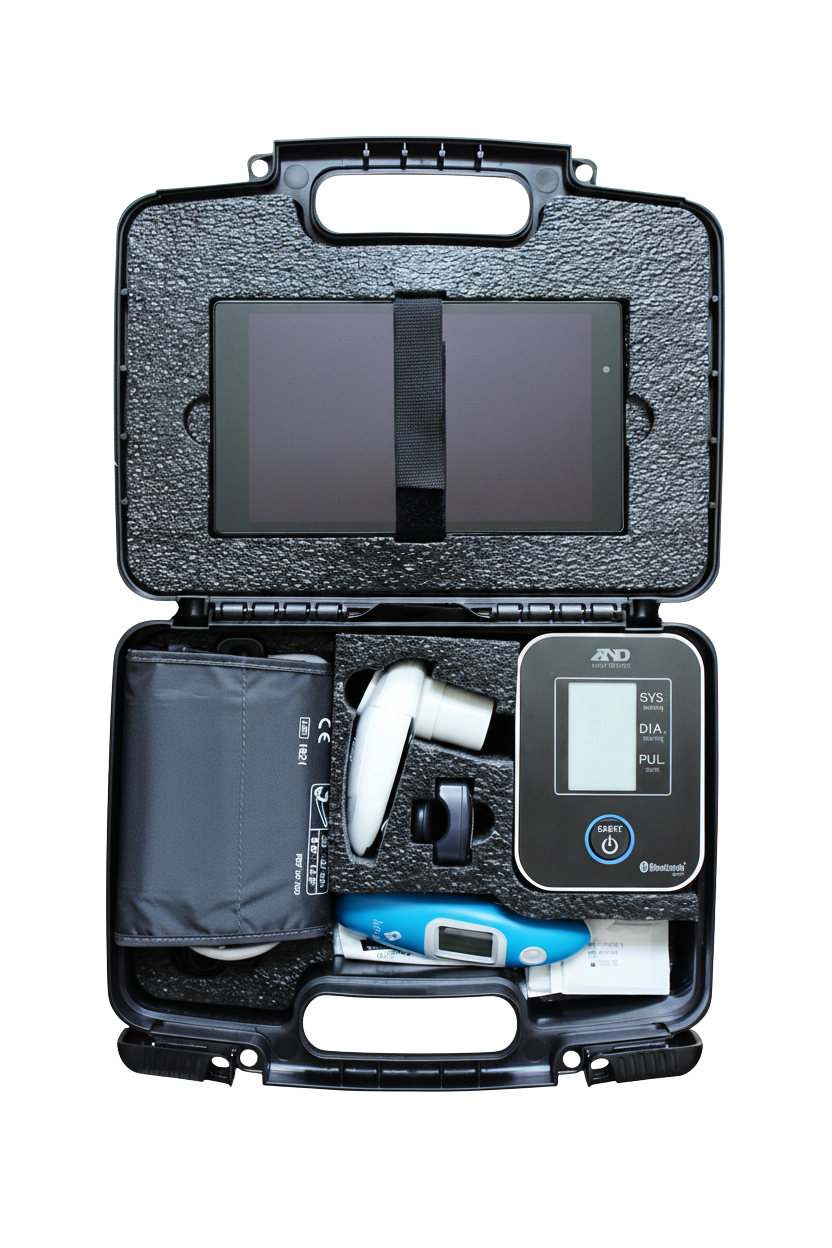
Hospital-grade equipment in a lightweight, portable kit.

  • 14" touchscreen tablet with 1080p HD webcam
  • Rugged IP-67 dust-proof and water-proof hard case, about 20 lb
  • 12-hour battery life
  • Same device menu as the cart: stethoscope, exam camera, otoscope, 12-lead ECG, pulse oximeter, blood pressure monitor, glucometer, spirometer
  • Used in rural and community health, post-acute home visits, urgent care, schools, and mobile health vans
Telemedicine kit details →
Telemedicine Starter Kit
Starter telemedicine kit

Starter Telemedicine Kit

Essential exam devices for a computer you already own.

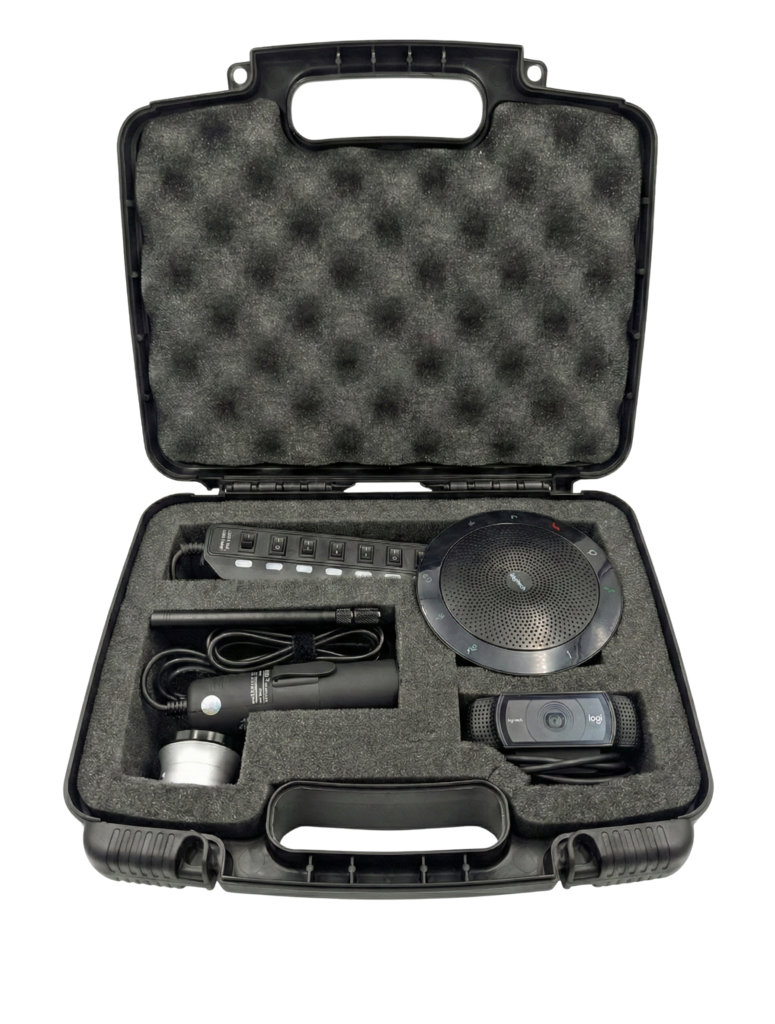
  • Handheld exam camera, digital video otoscope, and digital stethoscope
  • HD webcam and speakerphone
  • USB hub and audio adapter, pre-wired
  • 12" hard case with pre-diced foam, about 5 lb
  • Turns a PC or laptop you already own into a telemedicine workstation
Starter kit details →
RPM Kit
Remote patient monitoring kit

Remote Patient Monitoring Kit

Home vitals for chronic care management, on the same platform.

  • 7" cellular tablet with a three-button patient app and data plan
  • Bluetooth blood pressure monitor, pulse oximeter, glucose meter, and weight scale, as needed
  • Readings flow to the care team dashboard with configurable alert thresholds
  • Reusable kits: your staff reprocess and reissue them to the next patient
  • Telemedicine visits launch from the same platform
Remote patient monitoring details →
Devices

Telehealth devices we integrate

We do not manufacture devices. We select established third-party instruments, integrate them into our carts and kits, and make their output flow into the visit: USB devices stream live in the video call, and Bluetooth devices send readings into the patient record without manual entry.

Digital stethoscope

Riester

Digital stethoscope that transmits heart and lung sounds live through the video visit, so the remote provider auscultates in real time.

Streams live in the visit

Video otoscope

Firefly Global

1280×1080 digital otoscope with adjustable LEDs for ear, nose, and throat examination.

Streams live in the visit

Handheld exam camera

USB HD exam camera

Eight brightness-adjustable LEDs and 10–500 mm focus for skin, wound, throat, and dental views at 1280×720.

Streams live in the visit

12-lead ECG

SmartHeart

Hospital-grade 12-lead ECG in about 30 seconds with guided electrode placement. The tracing lands in the visit record.

Bluetooth, no manual entry

Blood pressure monitor

A&D Medical

Clinically validated upper-arm monitor. Readings sync into the visit over Bluetooth LE.

Bluetooth, no manual entry

Pulse oximeter

Nonin

SpO₂ and pulse rate across a wide range of patients, synced into the visit record.

Bluetooth, no manual entry

Spirometer

Vitalograph

FEV1 and FEV6 for COPD, asthma, and other respiratory monitoring, read wirelessly.

Bluetooth, no manual entry

Glucometer

Multi-patient professional meter

Professional multi-patient glucose meter: results in 4 seconds from a 0.5 µL sample.

Manual entry

Thermometer

Non-contact infrared thermometer

Non-contact forehead temperature for every visit.

Manual entry

Multi-specialty scope

JEDMED

Interchangeable attachments for ENT, dermatology, ophthalmology, audiology, women’s health, and dental exams.

Optional

Fundus camera

Non-mydriatic handheld

Captures retinal images without dilation for tele-ophthalmology.

Optional

Handheld ultrasound

Butterfly Network

Whole-body point-of-care ultrasound, available as an add-on to carts and kits.

Add-on

Device makes and models are representative of current configurations and may be substituted with equal or better specifications. We integrate third-party devices; we do not manufacture them.

Software

One software platform runs every piece of equipment

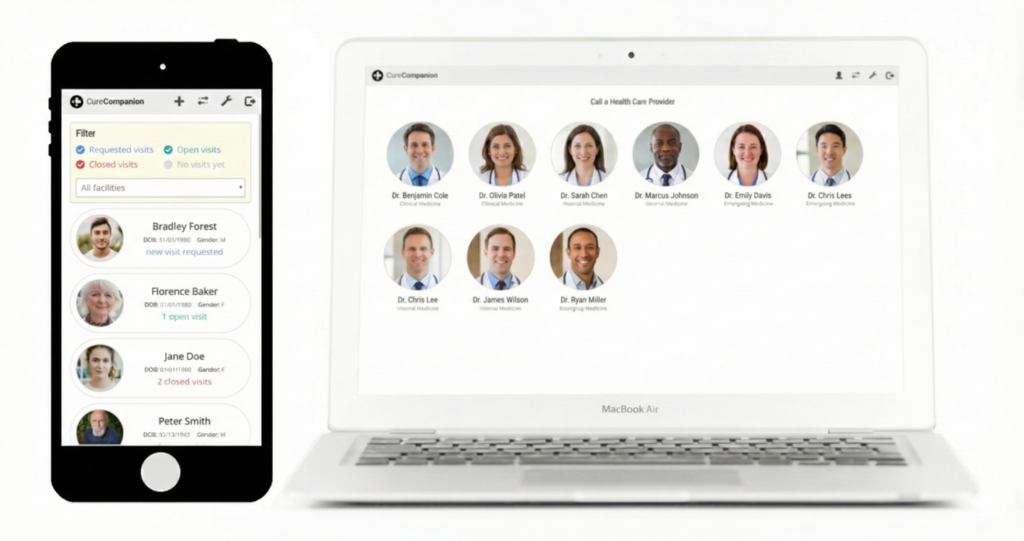
Carts, kits, and RPM kits all run on the CureCompanion platform, so staff learn one workflow and providers see one patient record.

  • HD video visits on iOS, Android, PC, Mac, and the browser: instant, scheduled, and nurse-assisted visits, plus guest join links
  • One-click switching between the exam camera, otoscope, and stethoscope during the visit
  • Bluetooth LE vitals and ECG recorded into the visit with no manual entry
  • Patient records, scheduling, secure messaging, and e-signature
  • AI documentation available: ambient listening drafts the progress note, and facility-defined post-visit assessments measure the outcomes you care about. A tool to support clinicians, not replace clinical judgment.
  • White label option under your own brand
Explore the software platform
Telehealth Software Platform

Open, not locked down

The cart is an open hospital-grade workstation, not locked to our software. Your EHR, imaging, or other clinical software can run on it alongside ours.

EHR integration

Launch visits from your EHR through SMART on FHIR and post the note back to the chart. PointClickCare workflows for skilled nursing.

Security and compliance

HIPAA compliant with a Business Associate Agreement, AES-256 encryption at rest, TLS 1.2+ in transit, access controls, audit logging, and daily backups.

Buyer’s guide

How to choose telehealth equipment

Five questions settle most configurations. We walk through them on every quote.


01

Where is the patient?

An exam room, emergency department, or nursing unit calls for a cart. Home visits, schools, and mobile units call for a kit. Patients managing chronic conditions at home need a remote patient monitoring kit.


02

Which exams do you need?

Match devices to specialties: stethoscope and otoscope for primary care and pediatrics, exam camera for wound care and dermatology, 12-lead ECG for cardiology, spirometer for respiratory care, and Bluetooth vitals devices for every visit.


03

Power and connectivity

Carts run on a standard 120V outlet with battery backup and need no dedicated circuit or static IP. Plan about 1 Mbps symmetric per concurrent visit, with 4–5 Mbps recommended (our specification).


04

Integration and lock-in

Confirm the hardware is not locked to one vendor’s software, that readings reach the record without retyping, and that your EHR can launch the visit.


05

Total cost and sustainability

Hardware is purchased once with no recurring hardware charges; software is licensed per organization, not per cart or per user; RPM kits are reusable. Cost-effectiveness is the sustainability criterion rural programs are judged on after the grant ends.


Match the equipment to the setting


Setting Typical configuration

Critical access hospital or rural health clinic

Telemedicine cart for exam rooms and the emergency department; kits for outreach clinics. Rural and community health →


FQHC or community health center

Cart at the main site, kits at satellite sites and for home visits.


Skilled nursing facility

Telemedicine cart for after-hours and specialist consults, with PointClickCare integration. Telemedicine for skilled nursing →


School-based health center

Telemedicine kit, or the Starter Kit with an existing school computer. Telehealth for schools →


Chronic care at home

RPM home kits with telemedicine visits on the same platform. Remote patient monitoring →


Funding

Funding telehealth equipment: RHTP, USDA DLT, and state grants

We supply equipment to USDA Distance Learning and Telemedicine grant recipients and state-funded telemedicine programs, and we work with organizations putting Rural Health Transformation Program funds to work. Here is what each program means for your equipment budget.


$50B

CMS Rural Health Transformation Program, five years beginning federal fiscal year 2026


50 states

Every state received a first-year award and decides how funds reach rural providers


~$200M

Average first-year award per state, with equipment and telehealth among the named priorities

Figures per CMS announcements, December 2025 to 2026. Verify current figures and timelines with your state’s RHTP office.

Rural Health Transformation Program (RHTP)

CMS’s $50 billion, five-year program funds all 50 states, which sub-award to rural providers. Its infrastructure and technology priority explicitly covers equipment, telehealth, and other digital tools, and states are already funding telehealth and remote patient monitoring projects with it.

USDA Distance Learning and Telemedicine (DLT)

We have responded to DLT equipment bids and delivered systems to DLT grant recipients. We provide itemized quotes, specification sheets, and the equipment descriptions your budget justification needs, in the format the application asks for.

State and foundation grants

State telemedicine grants, school-based health center grants, and foundation awards follow the same pattern: reviewers want a sustainable program and equipment that keeps working after the grant ends. Our pricing model is built for that: hardware owned outright, one software license per organization, reusable RPM kits.

What we provide to grant-funded buyers

Included with every quote.

  • Itemized quotes and specification sheets in the format your application requires
  • Equipment descriptions and budget-justification language
  • Pricing held through your grant cycle
  • Non-debarment certification and vendor documentation on request
  • Sustainability framing for reviewers: outright hardware purchase, one software license per organization, reusable RPM kits

Eligibility and allowable costs are set by each program and state. We support the vendor side of your application.

Why CureCompanion

Why organizations buy telehealth equipment from CureCompanion


Since 2015

One of the first companies to build telemedicine carts and kits, based in Austin, Texas.


14+ states

Rural and community health customers across the United States, plus 12+ countries.


Grant-ready

Vendor to USDA DLT, state telemedicine grant, and RHTP-funded programs, with quotes and specifications built for applications.


One vendor

Accountable for the hardware, the software, a 12-month warranty, and remote training.

About CureCompanion →
FAQ

Telehealth equipment FAQ

The questions we hear most from hospitals, clinics, and grant applicants before they request a quote.

What equipment do you need for telehealth?

At minimum, a camera, microphone, display, and a secure video platform. For a medical exam rather than a video chat, add a digital stethoscope, an exam camera, an otoscope, and vitals devices such as a blood pressure monitor and pulse oximeter, all integrated so the remote provider receives the images, sounds, and readings in real time.

What is the difference between a telemedicine cart and a telemedicine kit?

A cart is a mobile hospital-grade workstation with a large display, PTZ camera, battery backup, and height adjustment, built for exam rooms and nursing units. A kit packs a touchscreen tablet, webcam, and the same medical devices into a rugged portable case for home visits, schools, and mobile programs. Both run the same software.

Which medical devices connect to a telehealth cart or kit?

Our carts and kits integrate a digital stethoscope, handheld exam camera, video otoscope, 12-lead ECG, blood pressure monitor, pulse oximeter, glucometer, spirometer, and thermometer, with a multi-specialty scope, fundus camera, and handheld ultrasound available as options. Bluetooth devices send readings directly into the visit record.

Do we have to use CureCompanion software with the equipment?

Carts and kits are sold with the CureCompanion platform, which drives the devices during the visit. The cart itself is an open hospital-grade workstation that is not locked down, so your EHR, imaging, or other clinical software can run on it as well.

How much does telehealth equipment cost?

It depends on the configuration: the form factor, the medical devices you include, and the number of sites. Hardware is purchased outright with no recurring hardware charges, and the software is licensed per organization rather than per cart or per user. Request a quote and we will itemize a configuration for your program and budget.

Can RHTP or USDA DLT funds pay for telehealth equipment?

Both programs list equipment and telehealth among their priorities. RHTP’s infrastructure and technology priority names telehealth and other digital tools, and USDA DLT grants have funded telemedicine carts and kits for years. Eligibility and allowable costs are decided by the program and your state; we supply the quotes and specifications your application needs.

How much setup and training does the equipment need?

Systems arrive pre-connected, configured, and tested, and run over your existing network from a standard outlet. Training is remote, typically a 60 to 90 minute session per team with refreshers available, and the workflows are modeled on in-person visits so staff with minimal training can operate the devices.

Is the equipment HIPAA compliant?

Video, images, and readings travel through the CureCompanion platform, which is HIPAA compliant: encryption in transit (TLS 1.2+) and at rest (AES-256), access controls, audit logging, and a Business Associate Agreement.

Get started

Request a quote or a demo

Tell us about your sites, the exams you need to perform, and your funding timeline. We will reply with an itemized configuration, specification sheets, and a demo if you would like to see the equipment in use.

  • Itemized quote and specification sheet for your configuration
  • Budget-justification language for grant applications
  • Live demo of the cart, kit, or remote monitoring workflow
  • Typical lead time of 4 to 6 weeks after order

Prefer to talk? Call (512) 967-0664 or email contact@curecompanion.com.