
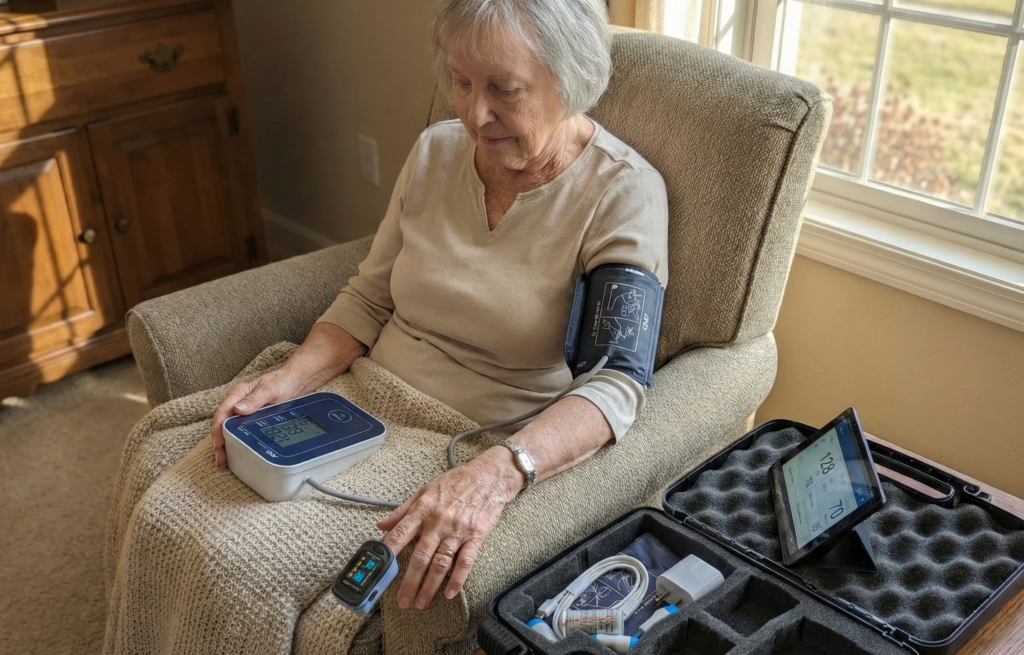
Blood pressure monitor
Upper-arm cuff; systolic, diastolic, and pulse sent to the tablet over Bluetooth.
CureCompanion’s remote patient monitoring (RPM) solution allows healthcare providers to continuously track patient vitals between visits and intervene before conditions worsen. Patients receive a home kit with Bluetooth-enabled devices, measure their vitals daily, and share the data wirelessly with their care team.
Our advanced software platform analyzes incoming patient data, alerts providers to concerning changes, and enables a telemedicine visit when intervention is needed. By integrating RPM and telemedicine in a single platform, CureCompanion gives providers the tools to manage chronic conditions proactively rather than reactively.






Bridge the gap between office visits.
Chronic conditions like heart disease, diabetes, COPD, and hypertension require ongoing management, but providers typically only see patients for brief appointments every few weeks or months. Between visits, changes in a patient’s condition can go undetected until they escalate into emergency room visits or hospitalizations.
Remote patient monitoring closes this gap by giving providers continuous visibility into their patients’ health between visits. Patients measure vitals such as blood pressure, blood oxygen, and blood glucose at home on a daily basis, and the data is shared automatically with their care team. When the data indicates a concerning change, the provider can intervene early — adjusting medications, scheduling a telemedicine visit, or escalating care — before the situation becomes an emergency.
Research from Mayo Clinic found that patients with chronic conditions monitored with RPM after hospital discharge had significantly lower 30-day readmission rates compared to unmonitored patients. For providers managing large panels of chronically ill patients, RPM shifts the model from reactive to proactive care.
Everything patients need to measure and share vitals from home, shipped configured. No smartphone, app download, or home internet is required.
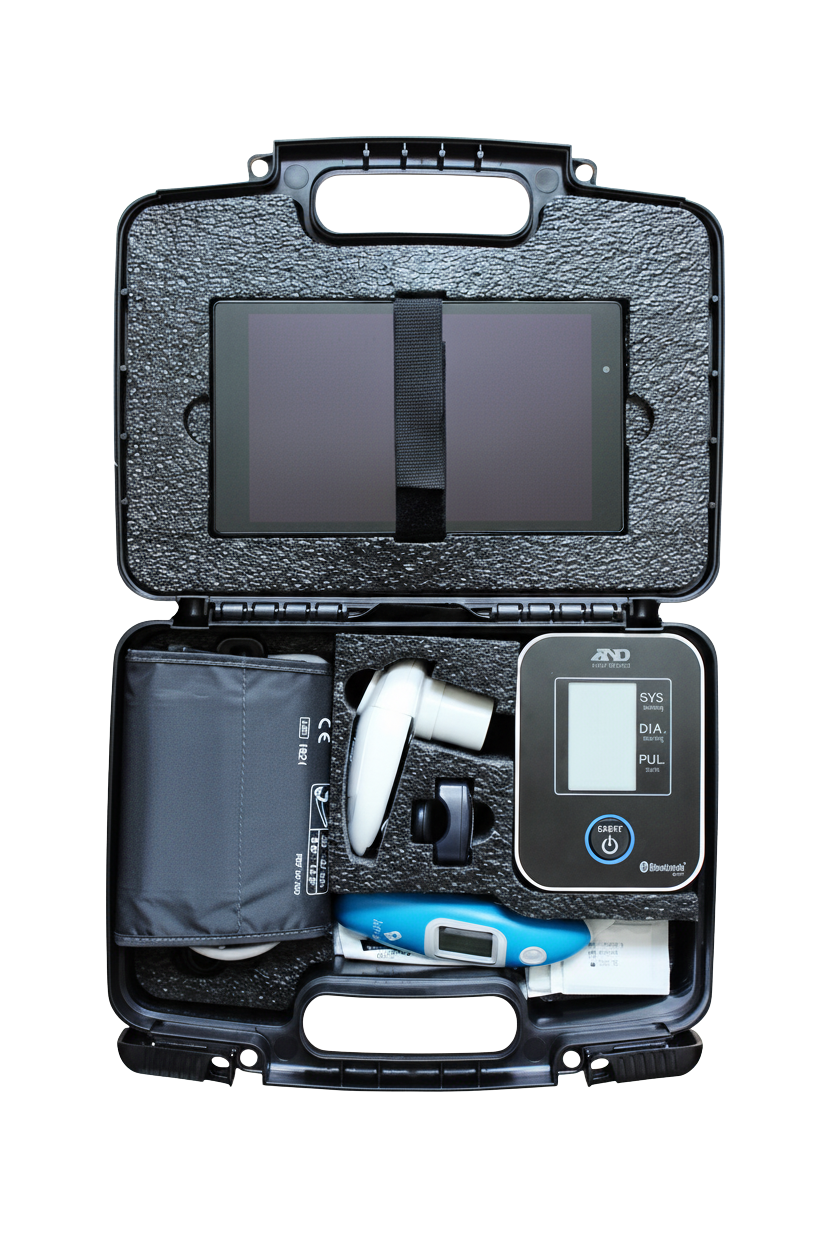
7-inch cellular tablet with a three-button patient app and a data plan, so no smartphone or home internet is required
Bluetooth blood pressure monitor
Bluetooth pulse oximeter
Bluetooth glucose meter
Bluetooth weight scale, as needed per program
Readings flow to the care-team dashboard, with alerts for readings outside the thresholds you define
Reusable: your staff reprocess and reissue kits to the next patient
Upper-arm cuff; systolic, diastolic, and pulse sent to the tablet over Bluetooth.
Fingertip SpO₂ and pulse rate for COPD, heart failure, and post-discharge monitoring.
Fingerstick readings for diabetes management, logged without manual entry.
Daily weight for heart failure and fluid monitoring, added to kits as the program requires.
Unified platform for continuous care. CureCompanion integrates RPM and telemedicine in a single platform, so when a patient’s vitals indicate a problem, the provider can immediately initiate a telemedicine visit without leaving the workflow.
Care-team dashboard with every patient’s readings in one place and alerts for values outside the thresholds you define.
A telemedicine visit launches from the same patient record, with the vitals history in front of the provider.
Encrypted video visits from a browser on any device, or from the iOS and Android apps.
EHR integration via SMART on FHIR and PointClickCare.
One license per organization covers RPM home kits, telemedicine kits, and carts.
AI documentation that drafts the note from the visit conversation, and facility-defined post-visit assessments, available on the platform.
HIPAA compliant with a Business Associate Agreement: AES-256 encryption at rest, TLS 1.2+ in transit, access controls, audit logging, and automated daily backups.
The care team reviews incoming vitals data through the CureCompanion dashboard. Alerts notify providers of readings that fall outside of defined thresholds, so the day starts with the patients who need a call.
This means the full cycle of chronic care management happens in one place: the patient measures vitals at home, the care team monitors the data and receives alerts, and when intervention is needed, the provider conducts a telemedicine visit immediately. The result is faster response times and fewer gaps in the care process.
Add telemedicine carts or kits later and they share the same patient record and the same license; readings from home and exams in the clinic sit in one chart.
Six steps from the kit arriving at the patient’s home to the follow-up visit, all on one platform.
The patient receives a CureCompanion home kit, containing Bluetooth-enabled devices for measuring vitals such as blood pressure, blood oxygen, and blood glucose.
The patient measures their vitals on a daily basis for a set monitoring period. The devices wirelessly transmit the readings to the CureCompanion software platform.
The care team reviews incoming vitals data through the CureCompanion dashboard. Alerts notify providers of readings that fall outside of defined thresholds.
When a concerning change is detected, the provider can adjust the care plan, contact the patient, or schedule a telemedicine visit directly from the platform.
If a virtual visit is needed, the provider connects with the patient over a secure video call. The provider reviews the patient’s vitals history, assesses their condition, and makes clinical decisions — all within the same platform.
The provider documents the visit and updates the care plan. Vitals monitoring continues, closing the loop between ongoing measurement and clinical intervention.
The tablet’s three-button patient app keeps the patient’s part simple: turn on the device, take the reading, done. No smartphone, app download, or home internet is required, and the kit comes back to your staff for the next patient.
Home kits are issued by your clinic, hospital, or health center to the patients you enroll, come back when the monitoring period ends, and go out again. The platform is the same one that runs telemedicine visits, so RPM adds to an existing program rather than a second system.
Kits
Shipped configured, with the tablet’s cellular data plan, so patients do not need a smartphone or home internet.
Reuse
Kits are reusable: your staff reprocess and reissue them to the next patient.
Delivery
Typically 4 to 6 weeks after order; kits arrive pre-connected, configured, and tested.
Training
Remote, 60 to 90 minutes per care team, with refreshers available; the patient side is a three-button app.
Warranty and support
12-month warranty, with email and phone support.
Licensing
Software is licensed per organization, not per kit or per user; one license covers RPM home kits, telemedicine kits, and carts. Your quote itemizes the kits for your program.
Rural Health Transformation Program (RHTP). Two of the statute’s allowable uses fit RPM directly: chronic disease management, and consumer-facing, technology-driven solutions for chronic disease. States are funding remote patient monitoring projects with it. How we fulfill RHTP telehealth, RPM, and AI expectations →
USDA Distance Learning and Telemedicine (DLT). DLT grants fund telemedicine equipment for rural providers; we have responded to DLT equipment bids and delivered equipment to DLT grant recipients, with the itemized quotes and specification sheets a budget justification needs.
State and foundation grants. State telehealth grants and foundation awards for chronic disease programs look for a sustainable program: reusable kits, one software license per organization, and your own care team doing the monitoring.
Itemized quotes and specification sheets in the format your application requires
Equipment descriptions and budget-justification language
Pricing held through your grant cycle
Sustainability framing for reviewers: reusable kits and one software license per organization
Non-debarment attestation and W-9 on request
Telehealth equipment and software from Austin, Texas, built for underserved settings.
Customers in 20+ states and 12+ countries, from critical access hospitals to community health centers.
Vendor to USDA DLT grant recipients, state telemedicine grants, and RHTP-funded programs.
Telemedicine visits, remote patient monitoring, and AI documentation on one platform with one patient record.
The questions care teams, administrators, and grant applicants ask before they request a quote.
Remote patient monitoring (RPM) uses home devices to send a patient’s vitals, such as blood pressure, blood oxygen, blood glucose, and weight, to their care team between office visits. The team watches for readings outside the thresholds it sets and intervenes early, with a call, a medication change, or a telemedicine visit, before the change becomes an emergency room visit.
A 7-inch cellular tablet with a three-button patient app and a data plan, plus the Bluetooth devices the program calls for: blood pressure monitor, pulse oximeter, glucose meter, and weight scale as needed. Readings reach the care-team dashboard automatically. What is in the home kit →
No. The tablet has its own cellular data plan and a three-button app, so the patient turns on the device, takes the reading, and is done. There is nothing to download, pair, or configure at home.
Heart disease, diabetes, COPD, and hypertension are the common ones: blood pressure and weight for heart failure and hypertension, blood glucose for diabetes, and blood oxygen for COPD and post-discharge monitoring. The device set in each kit follows the condition.
Your own care team, through the CureCompanion dashboard. Alerts flag readings outside the thresholds you define, so the day starts with the patients who need a call. We do not supply clinicians or monitoring staff.
Yes. The provider can adjust the care plan, contact the patient, or schedule a telemedicine visit directly from the platform, and the visit opens with the patient’s vitals history in front of the provider.
Yes. When a monitoring period ends the kit comes back to your staff, who reprocess and reissue it to the next patient, so a program keeps running on its existing kits.
Yes. Readings, alerts, and video visits travel through the CureCompanion platform, which is HIPAA compliant: encryption in transit (TLS 1.2+) and at rest (AES-256), access controls, audit logging, automated daily backups, and a Business Associate Agreement.
The platform integrates through SMART on FHIR and with PointClickCare, and RPM runs on the same CureCompanion software as the telemedicine carts and kits, so one license per organization and one patient record cover all three.
It depends on how many kits your program needs and which devices go in each one. Request a quote and we will itemize a configuration for your patient panel and budget.
Tell us your patient panel, the conditions you want to monitor, and which EHR you run. We reply with:
An itemized quote and specification sheet for the home kits and the software
A live demo of the care-team dashboard and a visit launched from an alert
Budget-justification language for RHTP and grant applications
Lead time and a training plan for your care team
Prefer to talk? Call (512) 967-0664 or email contact@curecompanion.com.